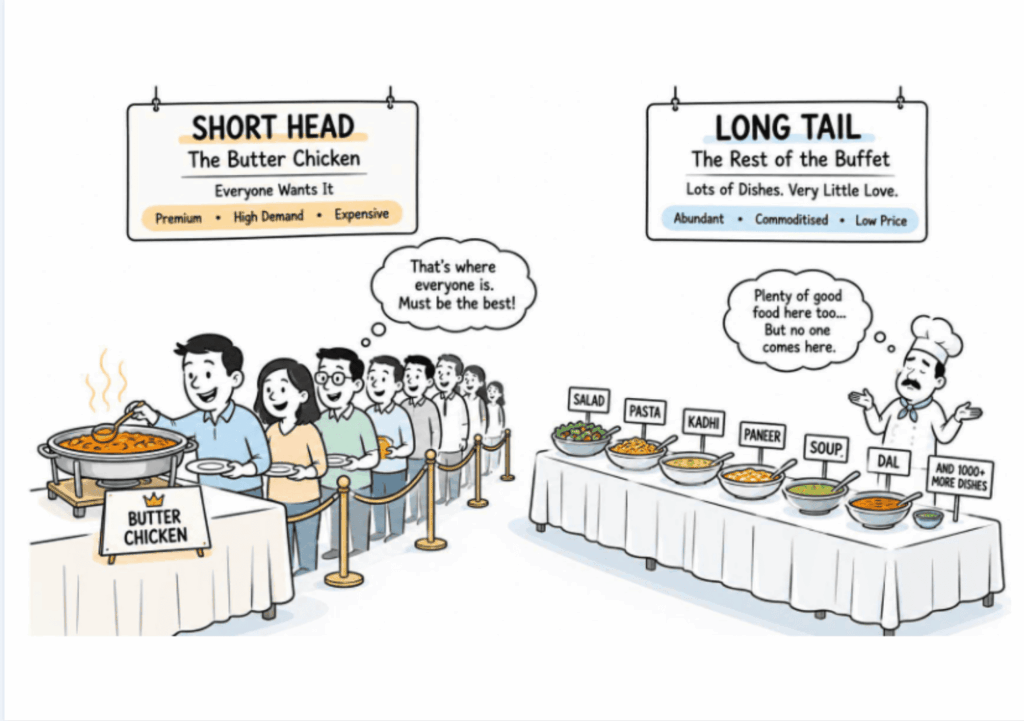
Imagine a wedding buffet. There are 50 dishes, but everyone is standing in the same queue for butter chicken. The salad, pasta, and perfectly respectable daal are sitting untouched at the other end of the table. Not because they are bad, but because everyone has decided that butter chicken is where the action is. So, the caterer keeps making more butter chicken, charges a premium for it, and nobody asks what happened to the daal.
Digital advertising is not very different, there is a paradox hiding in plain sight. A small group of publishers gets a disproportionate share of advertising attention and budgets, while the vast majority of publishers fight over what remains.
This is the short head vs. long tail problem.
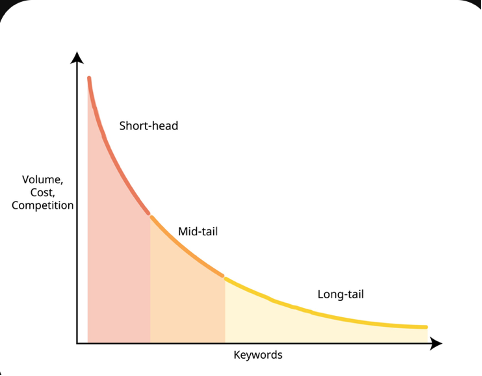
The Short Head: The Premium Playground
The short head consists of the publishers and platforms that command massive audiences, high engagement, strong brand recognition and, most importantly, demand from advertisers. Their inventory is scarce relative to the number of advertisers who want it. As a result, it is expensive, premium and highly competed for.
The Long Tail: The Commoditised 80%
The long tail is almost the opposite. It consists of millions of publishers that collectively represent the majority of available digital inventory. Individually, they may not have the scale or brand recognition of the short head. Their inventory is abundant, fragmented and often sold like a commodity.
And that creates a strange economic outcome:
The short head owns the attention. The long tail owns the inventory.
Yet the money overwhelmingly follows the attention. The long tail can represent roughly 80% of total advertising inventory, while collectively commanding only around 20% of attention or impressions.
That imbalance is at the heart of the digital advertising paradox.
The Illusion of Premium: Why the Long Tail Gets Commoditised
1. Demand Creates the Premium: Brands naturally gravitate toward environments where audiences spend a disproportionate amount of their digital time. Brands are obsessed with the “prestige” of being seen next to massive names, as users spend a disproportionate amount of their digital time on a relatively small number of platforms. They are paying for the feeling of being premium, rather than the actual value of the human looking at the ad. Conversely, premium inventory is expensive partly because advertisers compete for it.
2. Convenience Has Economic Value: There is also an operational advantage to spending on short-head media. A large platform can offer massive scale through a single relationship, a standardised buying mechanism and relatively predictable measurement. An advertiser can reach millions of users without having to discover, evaluate and transact with thousands of individual publishers. That convenience has economic value.
So the short-head equation becomes:
High attention + high demand + limited desirable inventory + strong advertiser preference = premium pricing.
The long tail operates under a very different equation.
There is plenty of inventory, plenty of users and plenty of impressions. But because that inventory is fragmented and demand for individual publishers is relatively low, it often becomes commoditised.
Instead of being bought because a particular publisher is highly desirable, it is often bought because it satisfies a functional requirement:
“I need another 100 million impressions.”
That is very different from:
“I specifically want these impressions.”
The first is commodity buying. The second is premium buying.
Calling the long tail “non-premium” doesn’t mean that the content, publishers or users are inherently inferior. It simply means that the market assigns less incremental value to the inventory.
A niche publisher may have an extremely valuable audience. A specialist website may have highly engaged users. A smaller content creator may have more influence within a particular community than a much larger publisher. But unless advertisers can easily identify and access that value, the inventory may still be priced like a commodity.
This is one of the fundamental differences between audience value and inventory value.
The Advertising Paradox
There is something particularly interesting about the long tail. The users in the long tail aren’t necessarily different people. In many cases, the same user who spends significant amounts of time on short-head platforms also spends time across the long tail.
Consider an executive who reads the NYT in the morning. Later, the same person might visit a niche, independent woodworking blog. They don’t suddenly lose their disposable income, intelligence or brand affinities because they clicked over to a smaller website.
The person hasn’t changed. The user’s interests haven’t necessarily changed. What has changed is where the user is being observed and monetised.
This brings us to the interesting question:
If the long tail represents such a large proportion of total inventory, why does it receive such a small proportion of advertising attention and budget?
The simple answer is:
Advertisers don’t buy inventory merely because it exists. They buy inventory where they believe attention can be captured efficiently and reliably.
And the short head has already won that battle. The advertiser knows where people spend their time. The advertiser knows where scale exists. The advertiser knows which environments have proven performance. The advertiser knows which platforms are easy to buy.
So budgets naturally gravitate toward the familiar. This creates a self-reinforcing cycle:
Users spend time → advertisers see the users → advertisers increase demand → publishers command higher prices → publishers invest more → users continue spending time.
The short head becomes stronger because it is already strong.
The Real Problem: Fragmentation
The biggest disadvantage of the long tail isn’t necessarily audience quality.
It is fragmentation.
One publisher might have 0.1% of an advertiser’s desired audience. Another might have 0.2%. Another 0.05%. Individually, none of them appears important. But collectively, they could represent a massive audience.
The challenge is turning this fragmented supply into something that advertisers can discover, understand, evaluate, measure and buy with confidence.
This is where the long tail struggles.
The short head effectively says:
“Here is a massive audience. Buy it here.”
The long tail often says:
“Here are millions of impressions across thousands of places. Good luck finding the audience you want.”
The underlying audience may overlap significantly. But the buying experience is completely different.
Can the Long Tail Capture More Value?
Absolutely, but not by trying to become the new short head.
The opportunity is to make the value already present in the long tail easier to discover, easier to buy and more efficient to access.
Instead of asking:
“Which publisher should I buy?”
the more important question for advertisers is:
“How can I access this fragmented inventory through a simpler, more efficient buying mechanism?”
The good news is that this problem is already being partially solved for advertisers. The industry has been steadily building more efficient ways to aggregate, curate and access long-tail inventory at scale. But there is still significant room to improve.
How Are Advertisers Solving This?
If you’re an advertiser who recognises that the long tail contains valuable and highly engaged users, how do you buy that inventory without navigating thousands of publishers individually?
The traditional programmatic supply chain looks something like this:
Advertiser → DSP → Ad Exchange → SSP → Publisher
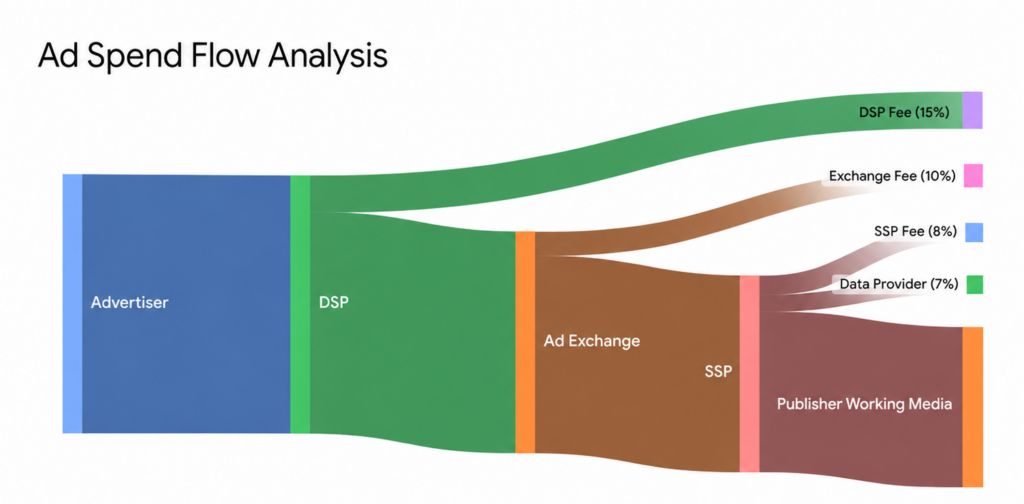
At every single step, a “tech tax” is extracted. By the time the money reaches a long-tail creator, it’s a fraction of what you paid. Worse, you usually have no idea exactly which niche sites your ad appeared on.
The answer isn’t necessarily to abandon programmatic. It is to make access to long-tail inventory more efficient, transparent and intentional.
Here are some of the ways advertisers can do/already doing that:
1. Private Marketplaces and Preferred Deals: Instead of throwing the budget into the open auction, advertisers can use Private Marketplaces (PMPs) and Preferred Deals. Advertisers retain the efficiency of automated buying while gaining greater control over the publishers, environments and inventory they are buying. This creates a useful middle ground between the scale of programmatic and the control of direct buying.
2. Publisher Collectives and Co-ops: Because individual long-tail publishers often lack scale, publishers can group together around a common vertical or audience. Advertisers can buy a larger, more coherent proposition rather than negotiating with dozens or hundreds of individual publishers.
The publisher gets scale. The advertiser gets efficiency. And the long tail becomes more visible and more buyable.
3. Contextual Networks: Contextual buying offers another way to unlock long-tail inventory without relying entirely on individual publisher selection or user-level tracking.
The value proposition shifts from:
“Buy this website.”
to
“Buy this context across relevant websites.”
How Can Publishers Stand Out?
The long tail doesn’t need to be “fixed.” It needs to become more visible, more buyable and more efficient.
The fundamental challenge for an independent publisher is not necessarily the lack of audience. It is that advertisers often cannot easily discover, evaluate or buy that inventory at scale. When inventory is difficult to find and cumbersome to transact, it naturally gets pushed toward commoditised programmatic buying.
So the objective for publishers should be simple:
Make yourself easier for advertisers to see, easier to buy, and more efficient to buy.
And this doesn’t mean abandoning programmatic. In fact, the first opportunity is to make the existing programmatic chain work harder.
1. Make Every Impression Work Harder:
Programmatic is not the enemy. Inefficient programmatic is. Publishers should first focus on extracting more value from the demand that already exists through better auction mechanics, stronger yield management, higher-quality inventory and improved viewability.
Technologies such as header bidding can allow multiple demand sources to compete for the same impression rather than relying on a sequential waterfall.
The objective isn’t simply to generate more impressions. It is to generate more value from every impression you already have.
2. Become More Visible to Buyers:
A long-tail publisher can have a valuable audience and still remain invisible to advertisers. That is partly a discoverability problem.
Publishers need to clearly communicate what makes their inventory valuable: the audience they reach, the context they own, the categories they specialise in, their scale, engagement and quality of inventory. In other words, publishers need to stop presenting themselves simply as “another website with impressions” and start presenting a proposition that an advertiser can understand and buy.
3. Aggregate Where Scale Is the Problem:
One of the biggest challenges of the long tail is fragmentation.
A publisher with 50,000 monthly users may be valuable, but that number alone may not be enough to attract a large advertiser. This is where publisher networks, collectives and curated marketplaces can play an important role. By bringing together publishers with complementary audiences, inventory can be aggregated without necessarily losing the quality or identity of individual publishers.
The goal is to turn hundreds of individually insignificant pools of inventory into something meaningful to an advertiser. This makes the inventory more visible and, importantly, more buyable.
4. Build a Proposition, Not Just Inventory:
This is where publishers can begin moving beyond pure programmatic.
Direct deals become much easier when a publisher has something distinctive to sell. That could be a highly engaged niche audience, a strong contextual environment, a specific category, a trusted community, exclusive content or a combination of these.
Advertisers are unlikely to bypass the programmatic chain simply because a publisher asks them to. So the progression should be:
Better programmatic execution → stronger proposition → greater advertiser visibility → direct demand.
5. Use First-Party Data to Strengthen the Proposition
A publisher that understands its audience can package more than just impressions. It can provide advertisers with meaningful signals about interests, behaviors and content consumption—within appropriate privacy boundaries.
This helps shift the conversation from:
“I have 10 million impressions.”
to
“I can give you access to a highly relevant audience in a context where they are actively engaged.”
That distinction can materially change how the inventory is valued.
6. Earn the Right to Go Direct:
Direct deals should therefore be viewed as an outcome, not the starting point. A publisher doesn’t need to immediately build a large direct-sales operation or reject programmatic advertising. First, make the existing inventory efficient. Then make the proposition differentiated. Then make the publisher visible to buyers. And once there is something genuinely valuable and distinctive to offer, take that proposition directly to advertisers.
The long tail does not need to become the short head. It needs to become easier to discover, easier to buy and harder to ignore.
And ultimately, that is how a publisher moves from being just another source of cheap impressions to becoming a source of valuable, efficiently accessible advertising inventory.
The opportunity is not to make every long-tail publisher premium. It is to make the value that already exists in the long tail visible to the market, and efficient to transact.
Comments